Top Material Choices for Roof Replacement in Succasunna, NJ Homes
A roof replacement is one of those projects that looks straightforward from the street and turns complex the moment the old shingles come off. In Succasunna, that complexity usually starts with weather. Morris County homes see humid summers, freeze-thaw winters, heavy rain, occasional wind events, and enough snow and ice to expose every weakness in flashing, ventilation, and material quality. A roof that performs well in a mild climate can disappoint quickly here if the material choice does not match the house and the conditions.
That is why homeowners looking into Roof Replacement Succasunna, NJ should think beyond color samples and headline price. The right roofing material affects not just curb appeal, but maintenance needs, attic temperature, storm durability, resale value, and how often you will have to revisit the job. I have seen two houses on the same block get very different results from a roof replacement because one owner chose based on lifecycle fit and the other chose strictly on initial cost.
The good news is that most homes in Succasunna have several viable roofing options. The trick is matching the material to the roof’s pitch, the home’s structure, the neighborhood aesthetic, and the owner’s long-term plans.
What Succasunna weather demands from a roofing material
Local climate shapes roofing decisions more than many people realize. Summer heat matters, but winter is often the real stress test. Snow loads can sit on a roof for days. Ice dams can form at eaves if insulation and ventilation are not handled properly. Spring storms drive rain sideways. By late fall, leaves can trap moisture in valleys and gutters, especially on homes near mature trees.
A roofing material in this area needs to do a few things well. It should shed water reliably, resist granule or surface loss from temperature swings, tolerate wind uplift, and work with proper attic ventilation. It also helps if repairs are practical. A material may look impressive on paper, but if matching sections later is difficult or replacement parts are expensive, that should factor into the decision.
Most roofing failures I’ve seen in northern New Jersey are not caused by one dramatic event. They come from years of small stresses: trapped heat in the attic, repeated freezing around nail penetrations, flashing that was good enough for year one but not year twelve, or low-cost shingles aging faster on a sun-exposed slope. That is why the material conversation has to include installation detail and house-specific conditions.
Asphalt shingles remain the most common choice for a reason
For most homes in Succasunna, architectural asphalt shingles are still the default option, and often the most sensible one. They balance price, appearance, availability, and dependable performance better than almost any other roofing material. When people hear "asphalt shingle," they sometimes picture the older three-tab roofs that looked flat and wore out quickly. The products being installed today on quality residential jobs are usually laminated architectural shingles, which have more thickness, more dimensional appearance, and typically better wind ratings.
On a standard suburban colonial, ranch, or cape, architectural shingles often fit the house visually without making the roof look out of scale. They also work well with the kind of roof geometries common in Succasunna, where dormers, valleys, attached garages, and chimney flashing details are routine. Contractors know the systems, replacement materials are easy to source, and repairs later are usually manageable if storm damage affects only one section.
The biggest advantage is value over time. A well-installed architectural shingle roof may offer a service life in the 20 to 30 year range, sometimes longer depending on product grade, ventilation, sun exposure, and maintenance. That range is broad because conditions matter. A shaded rear slope under overhanging branches will age differently from a south-facing front slope that bakes all summer.
There is also a premium tier within asphalt. Designer shingles can mimic slate or wood shake at a lower weight and lower cost than the real materials. They can look excellent on larger homes or houses with strong architectural lines, though they do push the budget upward. Whether they are worth it depends on how long you plan to stay and how visible the roof is from the street.
For many homeowners considering Roof Replacement Succasunna, NJ, asphalt is the right answer when they want proven performance without overbuilding for the neighborhood. The key is choosing a solid shingle line, not the cheapest one in the catalog, and pairing it with proper underlayment, ice and water protection, ventilation, and flashing.
Metal roofing has real strengths, but it is not the automatic upgrade some people assume
Metal roofing gets a lot of attention, and some of that attention is deserved. In the right application, metal can be an excellent long-term choice in northern New Jersey. It sheds snow efficiently, resists fire, and can last decades when installed correctly. Standing seam systems, in particular, are known for durability and clean appearance.
Still, metal roofing is not one product. Exposed-fastener panels, stone-coated steel, and standing seam each behave differently and carry different price points. On a barn, detached garage, or simple gable roof, metal can be straightforward. On a house with lots of penetrations, intersecting roof lines, and decorative trim details, the installation gets more demanding fast. That matters, because metal roofs are far less forgiving of mediocre workmanship than asphalt shingles.
Noise is often overstated. A properly installed metal roof over solid decking with attic insulation is not the drum effect people imagine from old sheds or pole barns. The more meaningful concerns are cost, contractor skill, and aesthetics. Some homes wear metal beautifully. Others end up looking mismatched, especially in neighborhoods where traditional shingles dominate.
Metal also expands and contracts with temperature changes. Good systems are designed for that movement, but details have to be right. Flashings, clips, panel lengths, and transitions all matter. I have seen metal roofs perform exceptionally well through snow seasons, and I have also Roof Replacement Succasunna, NJ seen expensive metal installations develop persistent leak points because the trim work was rushed.
For homeowners planning to stay for a long time, especially those with simpler roof shapes or a strong preference for a sharper architectural look, metal deserves a serious look. But it should be approached as a precision system, not just a premium material.
Synthetic slate and composite roofing offer the look many homeowners want without the weight penalty
Natural slate has a long reputation for beauty and longevity, but on most homes in Succasunna it is more aspiration than practical choice. True slate is heavy, expensive, and requires a level of structural capacity and installer specialization that many houses and budgets do not support. That is where synthetic slate and other composite roofing products come in.
These materials are designed to capture the textured, high-end appearance of slate or cedar shake while reducing weight and installation complexity. On a home with historic character or upscale curb appeal goals, this category can be compelling. Some of the better products look convincing from the ground and avoid the maintenance headaches associated with real wood.
The trade-off is that synthetic products vary widely in quality. Some are robust and well-tested. Others are newer to the market or have less of a track record in freeze-thaw climates. A homeowner should ask not only about warranty language, but about actual local installations that have been in place for years. A brochure can make every product sound permanent. Real aging tells the more useful story.
Composite roofing often makes sense when the owner wants a distinctive look that stands apart from standard shingles, but does not want the structural demands and cost of natural slate. It can also be a good fit when neighborhood character supports a more refined roofline. On the wrong house, though, it may be a visual and financial mismatch.
Cedar shake is beautiful, but usually a niche choice here
Cedar has undeniable charm. On certain homes, especially those with rustic, cottage, or traditional architectural character, it can transform the exterior. Fresh cedar shake has warmth and depth that manufactured materials struggle to replicate fully.
Yet beauty comes with baggage. In New Jersey’s humid stretches and shaded conditions, wood roofs require real care. Moss, mildew, and moisture retention are concerns, especially under tree cover. Fire resistance, local code considerations, and ongoing maintenance all need careful review. Cedar also tends to age unevenly depending on slope orientation and sun exposure.
There are homeowners for whom cedar is still the right call, typically those who love the look, understand the upkeep, and are willing to treat the roof as a premium exterior feature rather than a set-it-and-forget-it surface. For the average homeowner seeking practical performance and predictable maintenance, cedar is usually not the first recommendation.
This is one of those cases where admiration and suitability are not the same thing. A material can be excellent in the right hands and still be a poor fit for most houses in the area.
Flat and low-slope sections need a different conversation
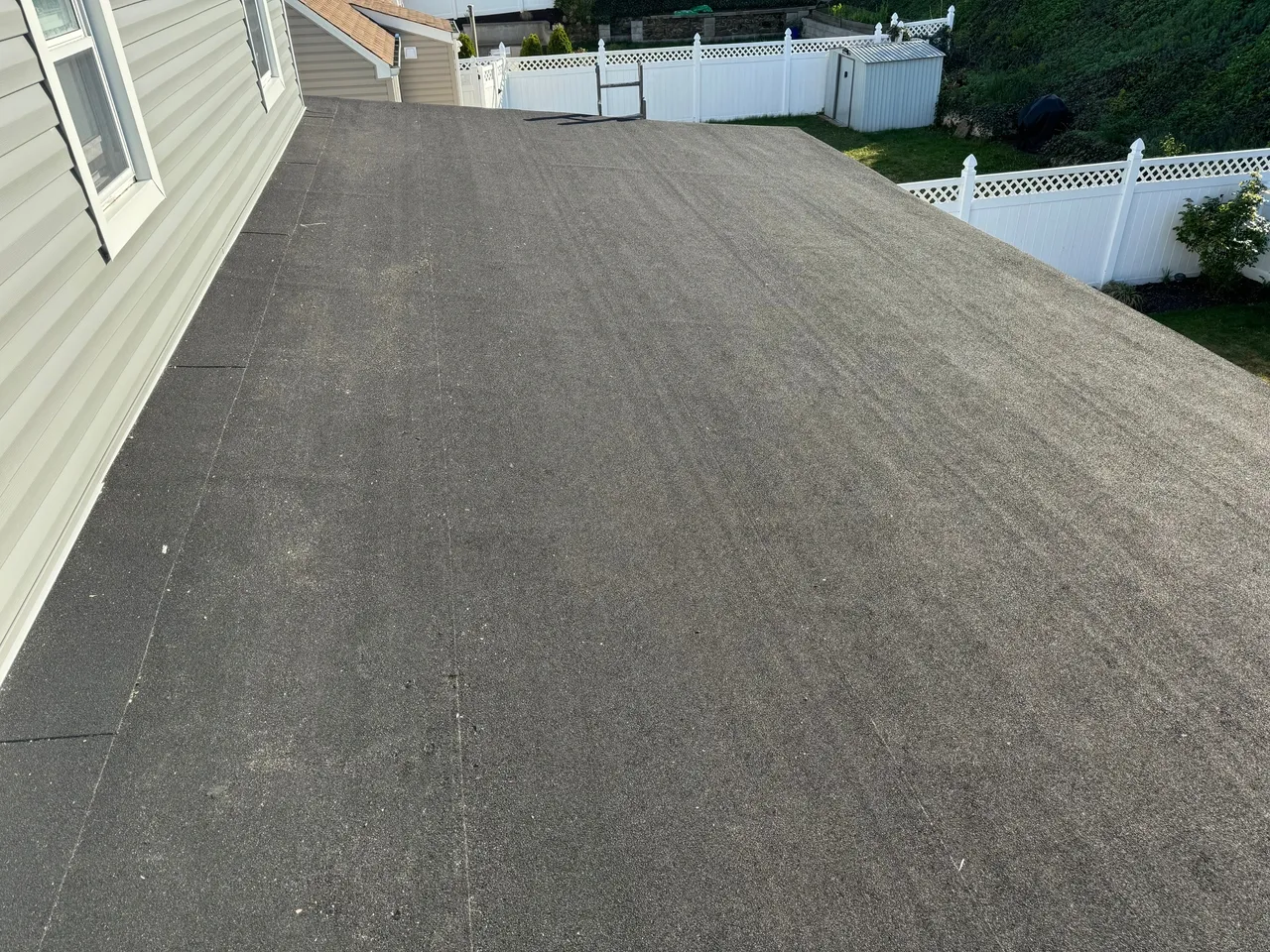
Many homes in Succasunna are mostly pitched roof structures, but that does not mean every section is pitched. Front porches, rear additions, bay windows, breezeways, and garage connectors often have low-slope roof areas that should not be treated with the same assumptions as the main roof.
This is where membrane systems such as modified bitumen or EPDM often come into play. If a contractor proposes extending standard shingles onto a section that does not have enough pitch, that is usually a red flag. Water moves more slowly on these areas, and the roofing material needs to be designed for that reality.
Low-slope sections are common sources of callbacks because they are easy to underestimate during a whole-house reroof. The main roof gets the attention, while the porch or addition roof quietly becomes the weak link. Homeowners should make sure these transitions are discussed clearly before the project starts. The best roof replacement plans treat each section according to how it actually sheds water.
Cost matters, but value comes from service life and performance
When people compare roofing materials, they often start with the quote total. That is understandable. Roof replacement is a major expense. But a lower number can become the most expensive option if the material underperforms or the installer cuts corners to hit that price.
A better way to think about it is to weigh cost against expected lifespan, maintenance demands, repairability, appearance, and how long you expect to own the home. A family planning to move in five years may make a different choice than a homeowner intending to stay through retirement.
Here are the factors I’d weigh before choosing a material:
- local weather exposure, including tree cover, wind, snow accumulation, and sun intensity
- roof complexity, such as valleys, chimneys, skylights, dormers, and low-slope transitions
- structural capacity, especially if considering heavier or more specialized materials
- long-term ownership plans, since lifespan and resale value matter more the longer you stay
- contractor expertise with the specific system, not just roofing in general
That last point deserves emphasis. A high-end roofing material installed by a crew learning on your house is rarely a smart bet. Skill with one system does not automatically translate to another. Asphalt, metal, and composite products each have their own failure points when handled casually.
Color and style are not minor decisions
Homeowners sometimes treat color as the easy part, but it can have a noticeable effect on the final result. The roof may account for a huge percentage of what you see from the curb. A color that looks rich on a sample board can read too dark on a broad roof plane, especially on a smaller house. Conversely, a blend that seems safe in the showroom may wash out against pale siding or brick.
In Succasunna neighborhoods with mature trees and mixed home styles, medium-toned shingle colors often age gracefully. Charcoal, weathered wood, and brown-gray blends tend to hide algae streaking and patching better than very uniform light colors. That said, the best choice still depends on the siding, shutters, stonework, and exposure.
On steeper roofs, dimensional shingles can cast stronger shadows and add visual interest. On lower roof pitches, the same product may look flatter than expected. If possible, it helps to look at actual nearby installations rather than relying only on manufacturer photography. Roofs look different under New Jersey light than they do in a studio image.
Installation details will make or break even the best material
A strong material choice cannot rescue weak workmanship. This is especially true in Roof Replacement Succasunna, NJ projects where older homes may have multiple layers of past repairs, hidden deck damage, or ventilation issues that only become visible once tear-off begins.
Ice and water shield placement matters near eaves and vulnerable roof sections. Flashing around chimneys, step flashing at sidewalls, valley treatment, ridge ventilation, and bathroom fan vent termination all affect how the roof performs. A homeowner may never see these details once the job is complete, but that does not make them secondary. In practice, they are often the parts that separate a roof that lasts from a roof that starts giving trouble early.
One common example is attic ventilation. Homeowners understandably focus on the exterior material, but poor intake or exhaust ventilation can shorten the life of shingles, contribute to moisture buildup, and worsen ice dam conditions. If the quote talks a lot about shingle brand but little about ventilation strategy, ask more questions.
Another example is decking condition. If the plywood or boards beneath the old roof have softened from past leaks, replacement may be necessary in sections. A thorough contractor will explain that possibility up front rather than pretending every roof deck is perfect until the invoice changes later.
The best material for most Succasunna homes
If I had to choose the most practical roofing material for the broadest number of homes in Succasunna, I would still point first to a high-quality architectural asphalt shingle system. That answer is not flashy, but it reflects real-world fit. It performs well in the local climate, suits most neighborhood aesthetics, allows for reliable repairs, and offers a sound balance between upfront investment and long-term value.
For homeowners who plan to stay for decades, have the budget, and like the look, metal can be an excellent step up, particularly on simpler roof designs. For those chasing a premium visual statement without natural slate’s structural burden, certain synthetic or composite products can be worth the premium. Cedar remains a specialty choice for homeowners who are fully committed to its maintenance profile.
The best choice is rarely the most expensive material on the sheet. It is the one that fits the house, the climate, and the owner’s priorities without forcing compromises that will show up later.
Questions worth asking before signing a roof replacement contract
A good roofing proposal should leave fewer mysteries, not more. Before committing, I would make sure these questions are answered clearly:
- What exact material line is being installed, and why is it appropriate for this roof?
- How will attic ventilation, flashing, and ice protection be handled?
- Are low-slope areas being roofed with the same system as steep slopes, or treated correctly?
- What happens if damaged decking is found after tear-off?
- How much experience does the crew have with this specific roofing material?
Those questions often tell you more about the quality of the job ahead than the sales pitch does. A confident contractor should be able to answer them without evasion or jargon.
Choosing with the house, not just the budget, in mind
Every roof replacement is a mix of economics and judgment. A tidy ranch with a simple pitch may not need a premium system to perform beautifully for decades. A large custom home with visible roof planes and complex intersections may justify a more specialized material and installation team. A house surrounded by trees may need algae resistance and ventilation attention more than it needs a designer profile. A homeowner nearing retirement may prioritize longevity and minimal maintenance over the lowest bid.
That is the practical lens I would use for Roof Replacement Succasunna, NJ. Start with climate, move to roof design, weigh how long you plan to own the home, and then choose the best material within that reality. The goal is not to buy the fanciest roof. It is to buy the roof that will still make sense when the seasons have had years to test it.
When that choice is made well, the roof fades into the background, which is exactly what a good roof should do. It protects quietly, handles what New Jersey throws at it, and lets the house get on with the rest of its life.
Royalty Exteriors
151 NJ-10 Suite 103A, Succasunna, NJ 07876, United States
+1 973-333-7234
FAQ About Roof Replacement Succasunna, NJ
What are signs a roof needs replacing?
Widespread shingle deterioration, repeated leaks, or damaged decking can point to a larger problem. A roofer can inspect the roof covering, flashing, and deck to determine whether the damage is localized or whether replacement makes more sense.
How long does it take to reroof a 2000 square foot house?
Royalty Exteriors estimates one to three days for many single-family roof replacements. A house’s floor area does not tell you the actual roof area. Pitch, roof features, weather, and any decking repairs can change the schedule.
How long should a roof last in NJ?
There is no single lifespan for every roof. Material, installation quality, attic ventilation, maintenance, and exposure to storms all affect how long a roof remains serviceable. An inspection can help you assess its condition and plan for replacement.